Professional Name Badge Templates for Quality Management Tea
TL;DR: A name badge template is a pre-designed layout used to create professional identification badges for employees, events, or visitors. These customizable templates typically include fields for names, titles, photos, company logos, and other relevant information, streamlining the badge creation process while maintaining consistent branding and professional appearance across organizations.
Frequently Asked Questions
What is a name badge template?
A name badge template is a pre-designed layout used to create professional identification badges for employees, visitors, or event attendees. These templates typically include placeholders for names, titles, company logos, and photos. They come in various formats like Word, PDF, or Canva, allowing easy customization while maintaining consistent branding across an organization.
How do I create a name badge template in Word?
To create a name badge template in Word, open a new document and select 'Mailings' then 'Labels.' Choose your badge dimensions, add text boxes for name and title fields, insert your company logo, and format fonts and colors to match your brand. Save as a template (.dotx) for reuse. You can also use Word's built-in label templates as a starting point.
What information should be included on a name badge template?
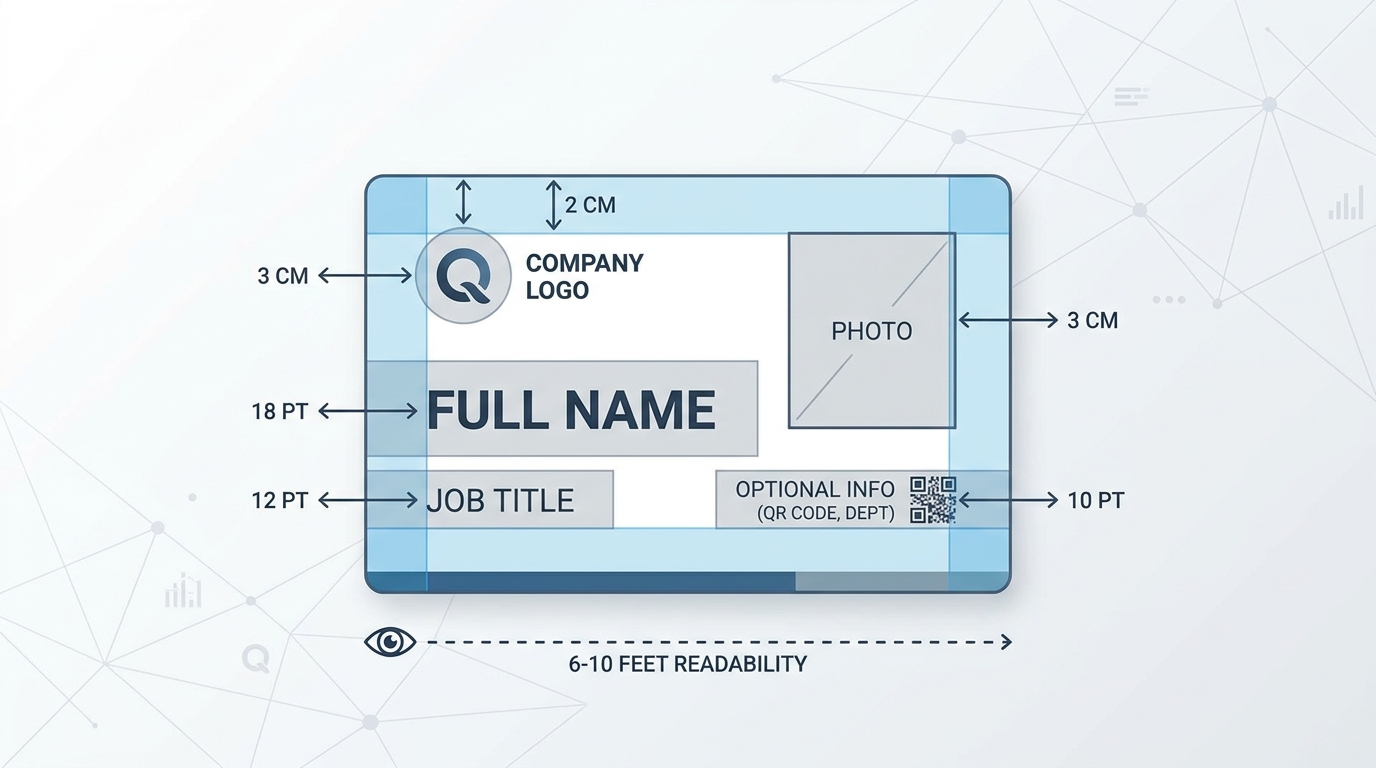
Essential information for a name badge template includes the person's full name in large, readable font, job title or department, company name and logo, and optionally a photo. For visitor badges, add date, host name, and expiration time. For events, include session access levels or color-coding. Keep designs clean and readable from 6-10 feet away.
What are the standard sizes for name badge templates?
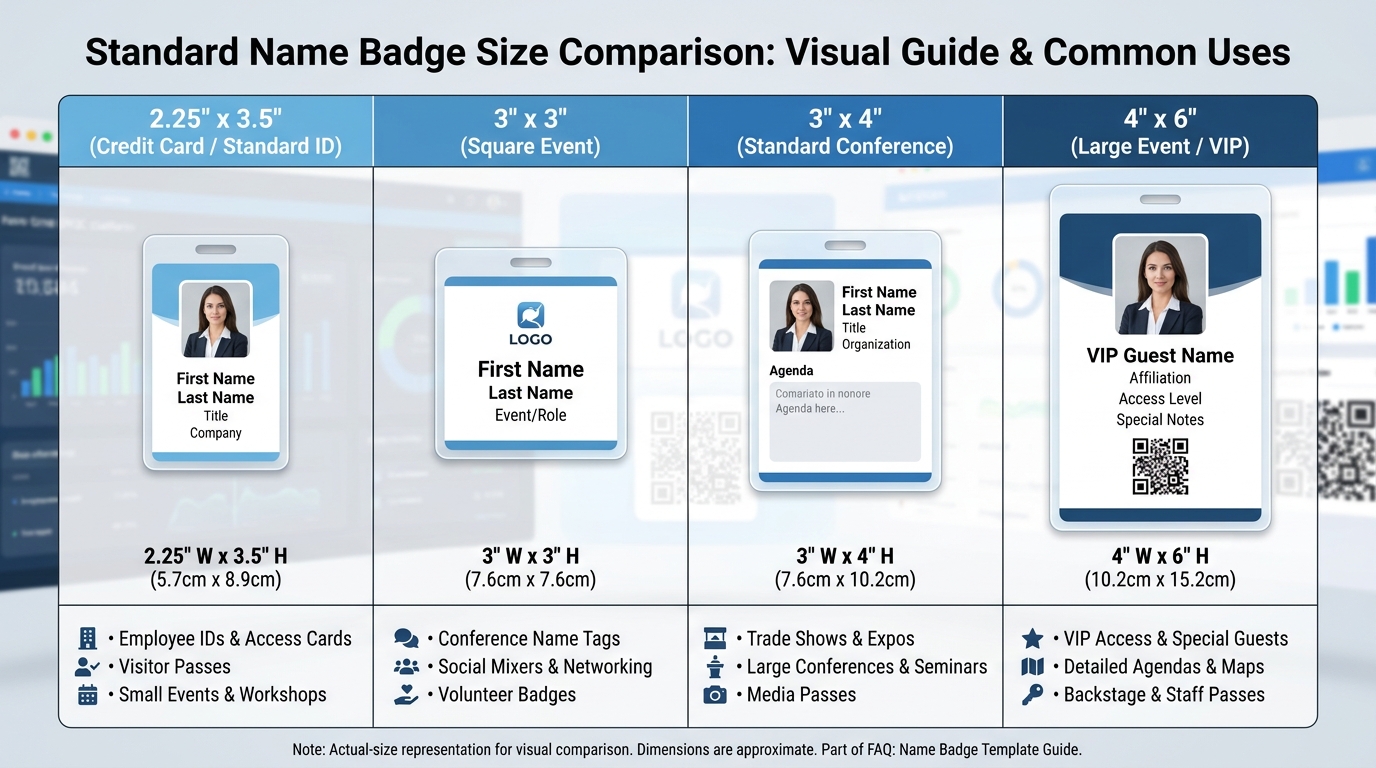
Standard name badge template sizes include 3" x 4" (most common), 2.25" x 3.5" (business card size), 3" x 3" (square format), and 4" x 6" (large events). The size depends on your badge holder or lanyard attachment. Horizontal orientation is typically preferred for readability, though vertical layouts work well for conferences with extensive information.
Can I use Canva to design a name badge template?
Yes, Canva offers excellent name badge template options with drag-and-drop functionality. Search for "name badge" in Canva's template library to find hundreds of customizable designs. You can modify colors, fonts, add logos, and create brand-consistent badges. Canva allows you to save your design as a template for repeated use and export in various formats for printing.
How do name badge templates integrate with quality management systems?
In quality management systems (QMS), name badge templates help maintain security and traceability during audits, inspections, and incident management. Digital badge systems can integrate with real-time QRQC platforms to track personnel access, certifications, and training status. This ensures only qualified individuals access specific areas, supporting compliance with ISO standards and corrective action procedures.
What is the difference between printable and digital name badge templates?
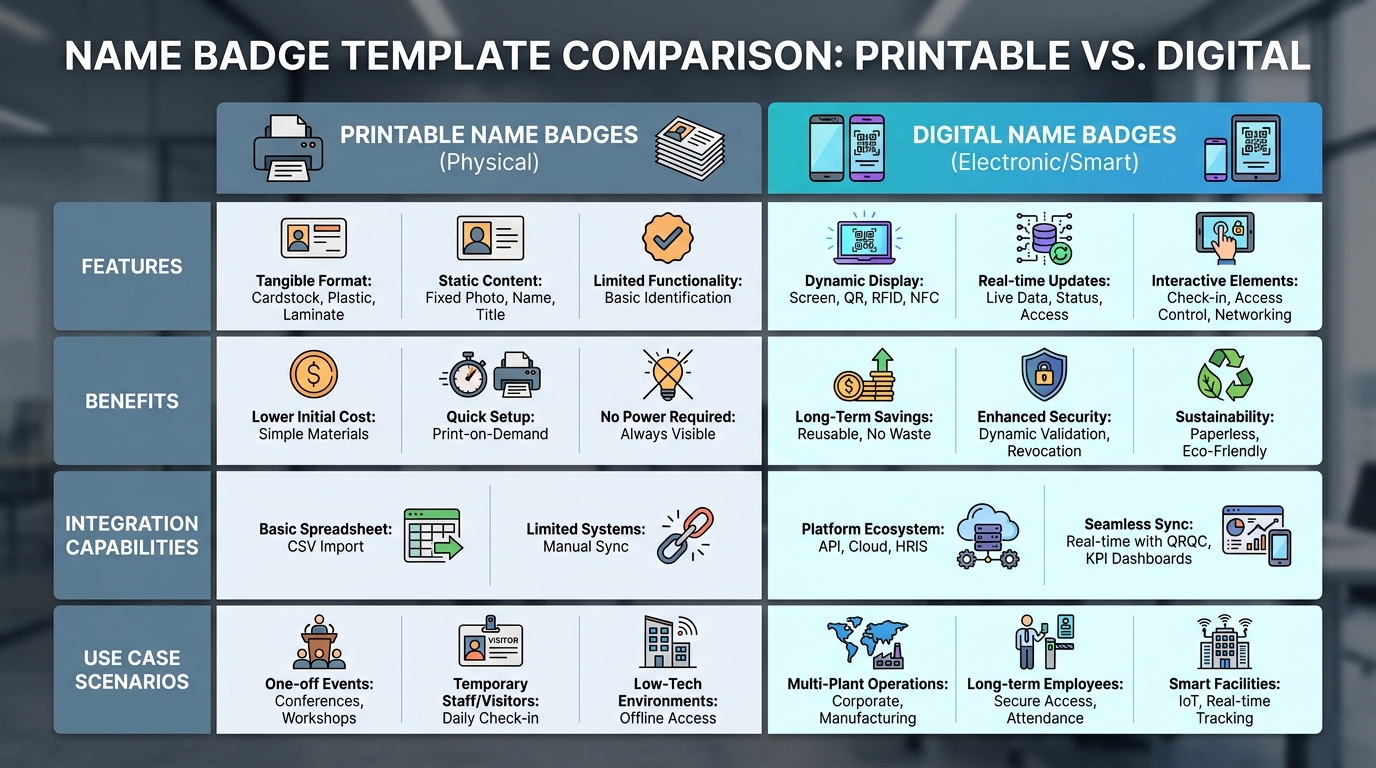
Printable name badge templates are designed for physical badges using standard printers and badge paper or card stock. Digital name badge templates are used for electronic displays, QR code badges, or mobile credentials. Digital versions can integrate with access control systems and update in real-time, while printable badges offer simplicity and don't require technology infrastructure.
How can name badge templates improve workplace organization and KPIs?
Name badge templates improve workplace organization by enhancing security, facilitating communication, and supporting key performance indicators (KPIs) tracking. They enable quick identification of personnel roles, departments, and access levels. In manufacturing environments, badges can integrate with incident management systems to track who reported issues, participated in corrective actions, or attended safety training, creating measurable accountability metrics.
Understanding Name Badge Templates in Professional Settings
A name badge template is an essential tool for creating professional identification cards used in corporate events, conferences, manufacturing facilities, and quality control environments. These templates streamline the process of producing consistent, branded identification materials that enhance security and professionalism across your organization.
In today's industrial and corporate landscapes, name badges serve multiple purposes beyond simple identification. They facilitate networking, enhance security protocols, and reinforce brand identity during events and daily operations.
Whether you're managing a multi-plant manufacturing operation or organizing a quality management conference, having the right name badge template can significantly improve operational efficiency and professional presentation.
Key Components of an Effective Name Badge Template
Creating a professional name badge template requires careful consideration of several critical elements that ensure both functionality and visual appeal.
Essential Information Fields
Every name badge template should include specific information fields that serve both identification and organizational purposes:
- Full name - displayed prominently for easy readability from a distance
- Job title or role - clarifies the individual's position and responsibilities
- Company or department name - establishes organizational affiliation
- Location or facility identifier - particularly important in multi-plant operations
- Photo placeholder - enhances security and personal recognition
- Logo area - reinforces brand identity and professionalism
Design Considerations for Manufacturing Environments
In industrial settings where quality management systems and operational efficiency are paramount, name badge templates must meet specific durability and visibility standards.
Manufacturing facilities implementing a QMS quality management system often require name badges that integrate with access control systems and safety protocols. These badges may include additional fields for safety certifications, access levels, or quality control roles.
| Environment | Key Features | Material Requirements |
|---|---|---|
| Manufacturing Floor | Large text, safety colors, QR codes | Durable plastic, water-resistant |
| Office/Administrative | Professional design, photo, department | Standard plastic or laminated paper |
| Conference/Events | Branding, session access, networking info | Temporary cardstock or lightweight plastic |
| Quality Control Areas | Role designation, clearance level, plant ID | Chemical-resistant, cleanable materials |
Creating Name Badge Templates for Different Business Needs
Different organizational contexts require tailored approaches to name badge design and implementation. Understanding these variations helps optimize your template for specific use cases.
Templates for Quality Management and Operations
Operations directors and quality managers overseeing complex manufacturing environments need name badge templates that integrate with broader quality control systems. These templates often include identifiers that align with integrated program management initiatives and quality tracking protocols.
When implementing lean and six sigma methodologies across facilities, name badges can include role-specific identifiers that clarify each team member's responsibilities in continuous improvement processes. This visibility supports faster problem resolution and clearer accountability structures.
Multi-Plant Operations Considerations
For manufacturing quality managers overseeing multi-plant operations, standardized name badge templates ensure consistency while allowing for facility-specific customization. This approach supports unified brand identity while maintaining necessary operational distinctions.
- Facility codes or color-coding systems for quick plant identification
- Standardized logo placement across all locations
- Consistent security features and access level indicators
- Integration with centralized quality management platforms like QRQC — Industrial Quality Control Software
Digital Template Resources and Design Tools
Modern template creation has been simplified through various digital tools and platforms that offer professional-quality results without extensive design expertise.
Popular Template Creation Platforms
Several platforms provide accessible template creation capabilities similar to how a canva invoice template or to do list template simplifies document creation. These tools offer drag-and-drop interfaces that make professional badge design achievable for non-designers.
When selecting a platform for creating your name badge template, consider factors such as customization flexibility, export options, and compatibility with your printing equipment or badge production service.
| Tool Type | Best For | Key Advantages |
|---|---|---|
| Online Design Platforms | Quick, professional designs | Pre-built templates, easy customization |
| Microsoft Word Templates | Simple, text-heavy badges | Familiar interface, widely accessible |
| Professional Design Software | Complex, branded designs | Complete control, advanced features |
| Specialized Badge Software | Large-scale production | Database integration, batch printing |
Template Formats and File Types
Understanding appropriate file formats ensures your name badge template works seamlessly with your production workflow. Similar to how you might need a purchase order template in word for procurement processes, choosing the right format for your badge template affects usability and print quality.
Common formats include PDF for print-ready files, PNG for digital displays, and editable formats like DOCX or PSD for ongoing customization. Each format serves specific purposes in the badge production workflow.
Integrating Name Badges with Quality Management Systems
In modern manufacturing and quality control environments, name badges serve as more than simple identification—they integrate with broader operational and quality management systems.
Tracking Key Performance Indicators
Organizations focused on understanding what are key performance indicators KPIs can leverage name badge systems to enhance data collection and accountability. When badges include unique identifiers or QR codes, they enable precise tracking of personnel involvement in quality incidents, corrective actions, and process improvements.
Supply chain professionals handling supplier quality issues benefit from badge systems that clearly identify roles and responsibilities, facilitating faster response times during quality incidents. This clarity supports the real-time incident management capabilities essential for modern quality control.
Supporting Corrective Action Programs
Plant managers tracking quality KPIs across facilities use name badge data to understand personnel involvement in corrective action programs. When integrated with platforms like industrial quality control software, badge information supports comprehensive incident tracking and resolution workflows.
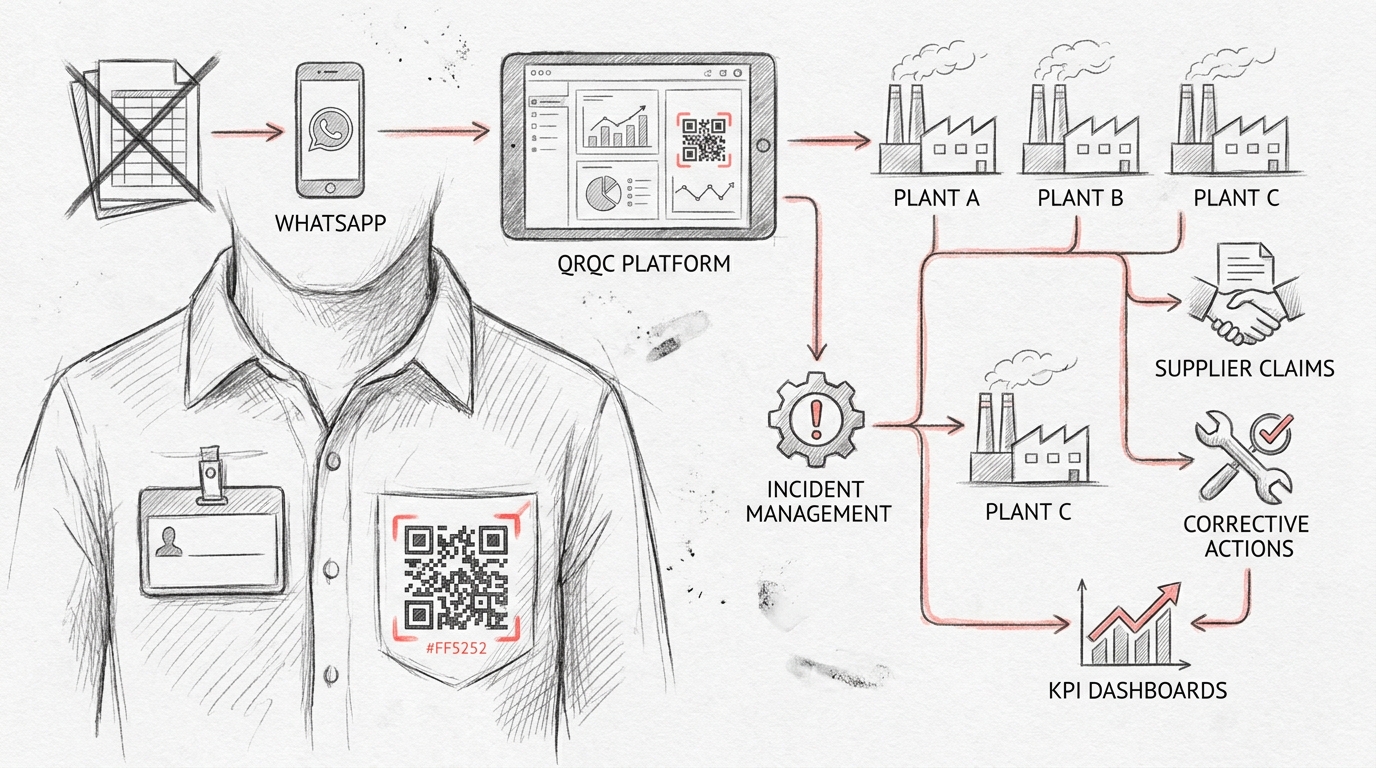
This integration replaces fragmented communication methods like spreadsheets and WhatsApp with centralized, real-time tracking systems that improve accountability and response times.
Best Practices for Name Badge Template Implementation
Successful name badge programs require thoughtful implementation strategies that balance security, usability, and professional appearance.
Standardization Across Facilities
Manufacturing quality managers overseeing multi-plant operations should establish standardized name badge templates that maintain consistency while allowing necessary facility-specific variations. This approach supports unified quality management initiatives while respecting operational differences.
- Create master templates with locked branding elements
- Define clear guidelines for customizable fields
- Establish color-coding systems for different roles or facilities
- Document badge issuance and replacement procedures
- Integrate badge systems with access control and security protocols
Security and Access Control Features
Modern name badge templates should incorporate security features appropriate to your facility's risk profile. These may include holographic overlays, RFID chips, magnetic strips, or QR codes that integrate with access control systems.
For facilities implementing comprehensive QMS quality management system protocols, badge-based access control ensures only authorized personnel enter sensitive areas like quality labs, sterile environments, or secure storage locations.
| Security Feature | Implementation Level | Primary Benefit |
|---|---|---|
| Photo ID | Basic | Visual verification of identity |
| Holographic Overlay | Intermediate | Prevents counterfeiting |
| RFID/NFC Chip | Advanced | Automated access control |
| QR Code Integration | Intermediate | Digital verification and tracking |
| Expiration Dates | Basic | Ensures current authorization |
Template Customization for Specific Industries
Different industries require specialized approaches to name badge design that reflect their unique operational requirements and regulatory environments.
Manufacturing and Quality Control
In manufacturing environments where lean and six sigma principles guide operations, name badge templates should support visual management systems. Color-coding by role, department, or quality certification level enables quick identification and supports faster decision-making during quality incidents.
Operations directors managing incident response and corrective actions benefit from badge systems that clearly identify quality team members, facilitating rapid assembly of response teams when issues arise.
Multi-Facility Operations
Organizations with distributed operations require name badge templates that balance standardization with facility-specific needs. This might include facility identifiers, location-specific emergency contacts, or region-specific safety information.
When implementing integrated program management across multiple facilities, standardized badge templates support unified communication and clearer organizational structure visibility.
Printing and Production Considerations
The practical aspects of badge production significantly impact the usability and cost-effectiveness of your name badge template program.
In-House vs. Outsourced Production
Deciding between in-house badge printing and outsourced production depends on volume, customization needs, and budget constraints. Large organizations with frequent personnel changes often benefit from in-house systems, while smaller operations may find outsourcing more cost-effective.
- In-house advantages: Immediate production, lower per-unit costs at scale, complete control over design
- Outsourced advantages: Professional quality, no equipment investment, access to advanced security features
- Hybrid approach: Outsource initial production, maintain in-house capability for replacements
Material Selection and Durability
Material choices significantly impact badge longevity and professional appearance. Manufacturing environments require durable materials that withstand daily wear, exposure to chemicals or moisture, and frequent cleaning.
Consider the same attention to detail you would apply to other professional documents like a cover note template or printed materials like pumpkin carving templates print—quality materials and production methods reflect organizational professionalism.
Leveraging Templates for Related Business Documents
Organizations that develop robust name badge template systems often benefit from applying similar standardization approaches to other business documents and templates.
Comprehensive Template Systems
Just as name badge templates streamline identification processes, other standardized templates improve operational efficiency across various business functions. Consider developing complementary templates for related needs:
- Visitor badge templates with clear expiration indicators
- Temporary contractor identification systems
- Event-specific badge variations for conferences or training sessions
- Emergency response role identifiers for crisis situations
This comprehensive approach to template development mirrors the efficiency gains organizations achieve with standardized documents like bubble letter template printable materials for signage or to do list template systems for task management.
Digital Integration Opportunities
Modern organizations increasingly integrate physical name badges with digital systems. QR codes on badges can link to digital profiles, training records, or quality certifications, creating seamless connections between physical identification and digital information systems.
This integration supports the kind of real-time data access that platforms like QRQC industrial quality control software provide for incident management and corrective action tracking.
Maintaining and Updating Your Badge Template System
A successful name badge program requires ongoing maintenance and periodic updates to remain effective and relevant.
Regular Review and Updates
Schedule regular reviews of your name badge template system to ensure it continues meeting organizational needs. Changes in branding, security requirements, or operational structure may necessitate template updates.
Plant managers tracking quality KPIs across facilities should include badge system effectiveness in their regular operational reviews, assessing whether current templates support efficient identification and access control.
Feedback Collection and Improvement
Gather feedback from badge users across all organizational levels. Front-line employees may identify practical issues with badge durability or readability that aren't apparent to management. Quality managers and operations directors can provide insights on how badge systems integrate with broader quality management initiatives.
This continuous improvement approach aligns with lean and six sigma principles, ensuring your badge system evolves to support operational excellence.
Cost Management and Budgeting for Badge Programs
Understanding the total cost of ownership for name badge programs helps organizations make informed decisions about implementation and ongoing operations.
| Cost Category | Initial Investment | Ongoing Costs |
|---|---|---|
| Template Design | $500-$2,000 | $200-$500 annually for updates |
| Printing Equipment | $1,000-$10,000 | Maintenance and supplies |
| Badge Materials | Varies by volume | $1-$5 per badge |
| Software/Database | $500-$5,000 | $100-$1,000 annually |
| Labor/Administration | Training time | Ongoing management hours |
Return on Investment Considerations
While name badge programs represent an investment, they deliver measurable returns through improved security, faster incident response, and enhanced professional image. Organizations tracking what are key performance indicators KPIs should consider including badge system effectiveness metrics in their operational dashboards.
Supply chain professionals handling supplier quality issues can quantify the value of rapid team identification during quality incidents, while operations directors can measure improved response times when badge systems integrate with quality management platforms.
Future Trends in Name Badge Technology
The evolution of name badge systems continues as technology advances and organizational needs become more sophisticated.
Smart Badge Integration
Emerging technologies enable name badges to serve as comprehensive digital tools beyond simple identification. Integration with IoT systems, real-time location tracking, and automated attendance systems represent the next generation of badge functionality.
These advanced systems support the kind of real-time operational visibility that manufacturing quality managers need when overseeing multi-plant operations, providing instant access to personnel location and availability during quality incidents.
Sustainability Considerations
Organizations increasingly consider environmental impact when designing badge programs. Biodegradable materials, digital badge alternatives, and reusable badge holders with replaceable inserts reduce waste while maintaining professional standards.
This sustainability focus aligns with broader corporate responsibility initiatives and supports positive brand perception among environmentally conscious stakeholders.
Transform Your Quality Management with Integrated Systems
While name badge templates represent one component of effective operational management, modern manufacturing and quality control environments benefit from comprehensive, integrated systems that connect identification, incident management, and quality tracking.
Organizations ready to move beyond fragmented spreadsheets and messaging apps need platforms that unify quality management across all facilities. Professional name badge systems work best when integrated with robust quality control infrastructure that supports real-time incident management, supplier claims processing, and corrective action tracking.
If you're a manufacturing quality manager overseeing multi-plant operations, a supply chain professional handling supplier quality issues, or an operations director managing incident response, consider how integrated quality management platforms can enhance your operational effectiveness. Visit our website to discover how QRQC transforms quality management with real-time incident tracking, KPI dashboards, and corrective action management across every plant in your operation.
Replace disconnected systems with a unified platform that brings together identification, tracking, and quality management in one powerful solution. Learn more about implementing comprehensive quality control systems at our about page or explore additional insights on our quality management blog.
Article created using IntentRank