Lean Operations Tools: Digital QRQC Platform for Manufacturi
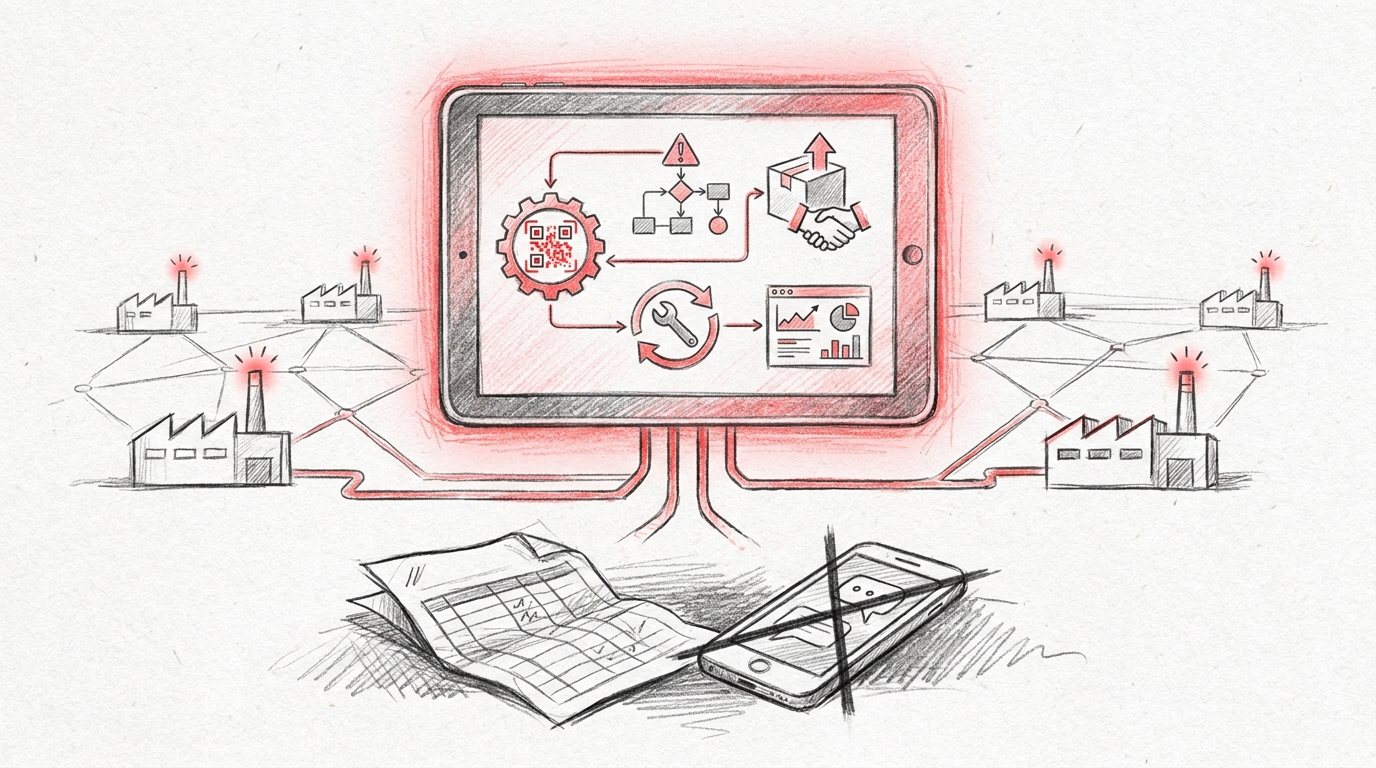
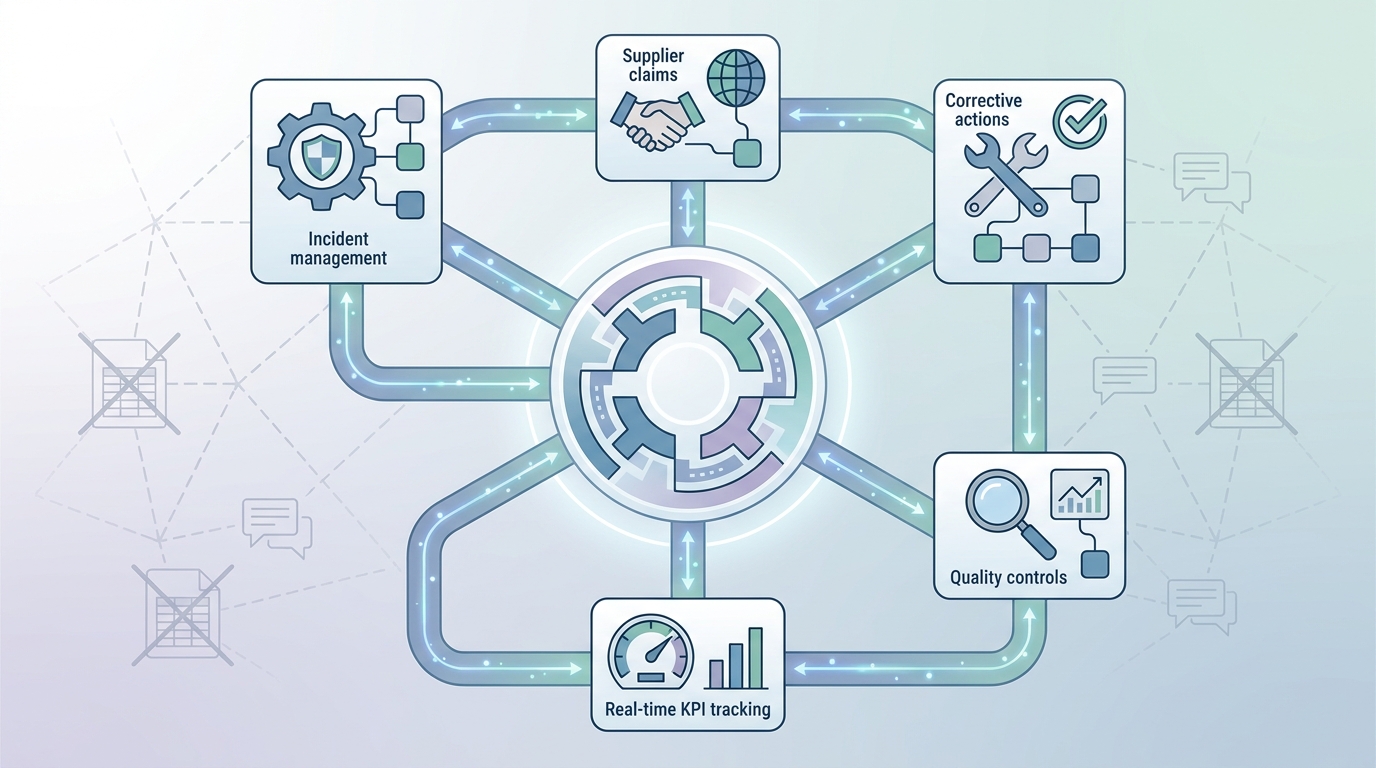
TL;DR: Lean operations tools are digital platforms that streamline manufacturing processes by replacing manual spreadsheets and messaging apps with integrated systems for incident management, supplier claims, corrective actions, and real-time KPI tracking. These tools enable QRQC methodology implementation across multiple plants, improving response times, collaboration, and operational visibility for continuous improvement initiatives.
Frequently Asked Questions
What are lean operations tools and how do they improve manufacturing efficiency?
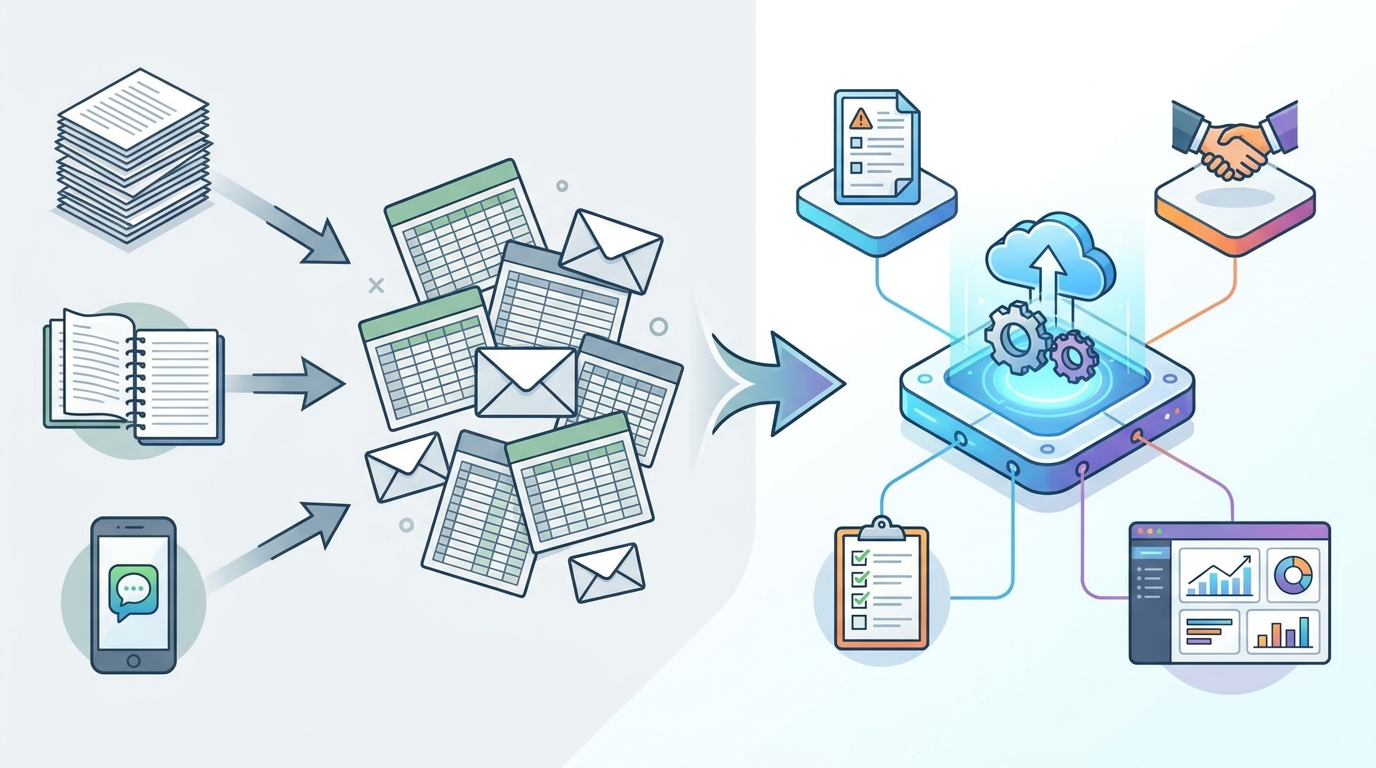
Lean operations tools are software platforms and methodologies that eliminate waste, streamline processes, and improve productivity in manufacturing environments. These tools replace manual systems like spreadsheets and WhatsApp with real-time platforms for incident management, supplier claims, corrective actions, and KPI dashboards. They enable organizations to implement continuous improvement practices, reduce operational costs, and enhance quality management across multiple facilities through centralized visibility and data-driven decision-making.
How do lean operations tools integrate with quality management systems (QMS)?
Lean operations tools integrate seamlessly with QMS quality management systems by providing real-time data collection, automated workflows, and standardized processes for quality control. These platforms enable QRQC (Quick Response Quality Control) methodologies, track corrective actions, manage non-conformances, and monitor quality KPIs across all plants. The integration ensures compliance with quality standards while reducing documentation time and improving traceability throughout the production process, replacing disconnected spreadsheets with unified quality management.
What key performance indicators (KPIs) should lean operations tools track?
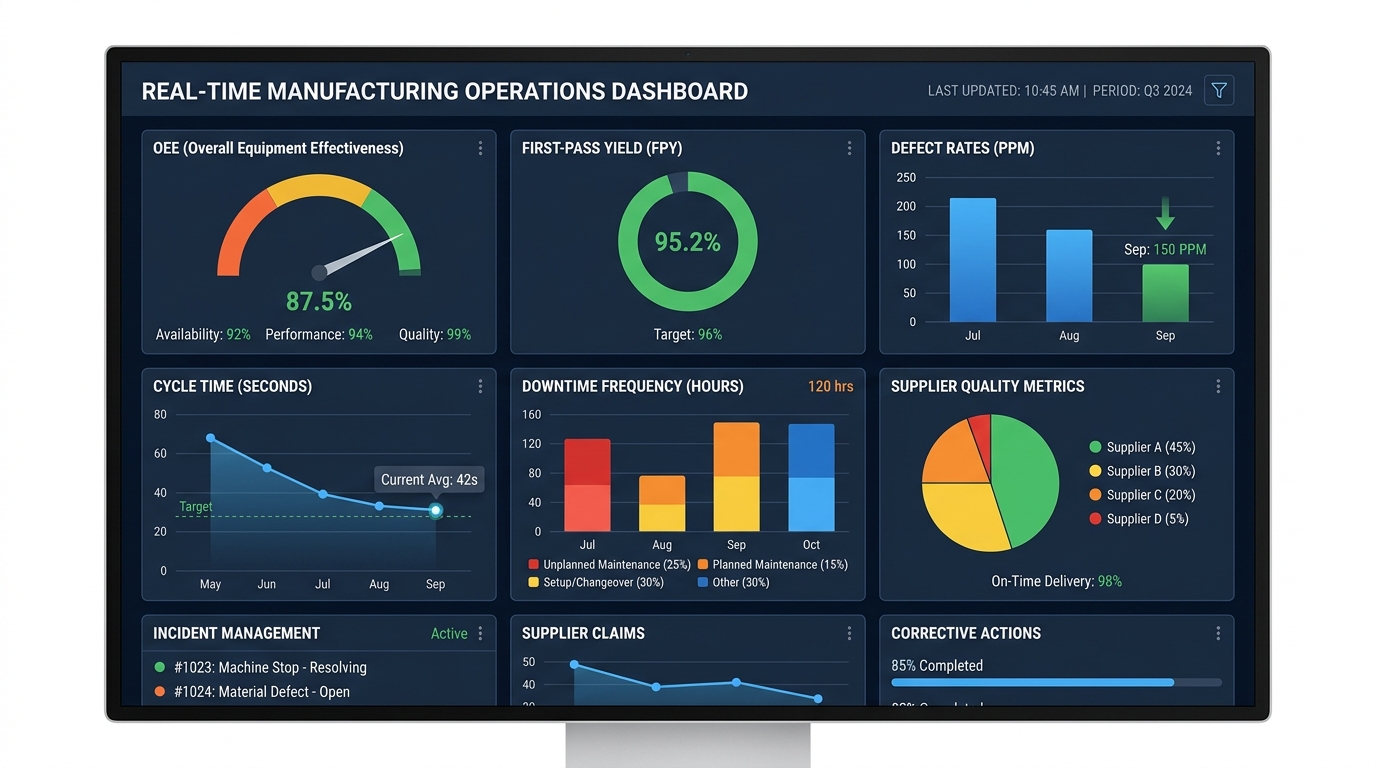
Effective lean operations tools should track KPIs including Overall Equipment Effectiveness (OEE), defect rates, cycle time, first-pass yield, downtime frequency, supplier quality metrics, corrective action closure rates, and cost of poor quality. These key performance indicators provide real-time visibility into operational performance across plants, enabling data-driven decisions. Modern platforms display KPIs through interactive dashboards that replace static spreadsheets, allowing managers to identify bottlenecks, measure improvement initiatives, and benchmark performance across facilities.
How do lean operations tools differ from lean and Six Sigma methodologies?
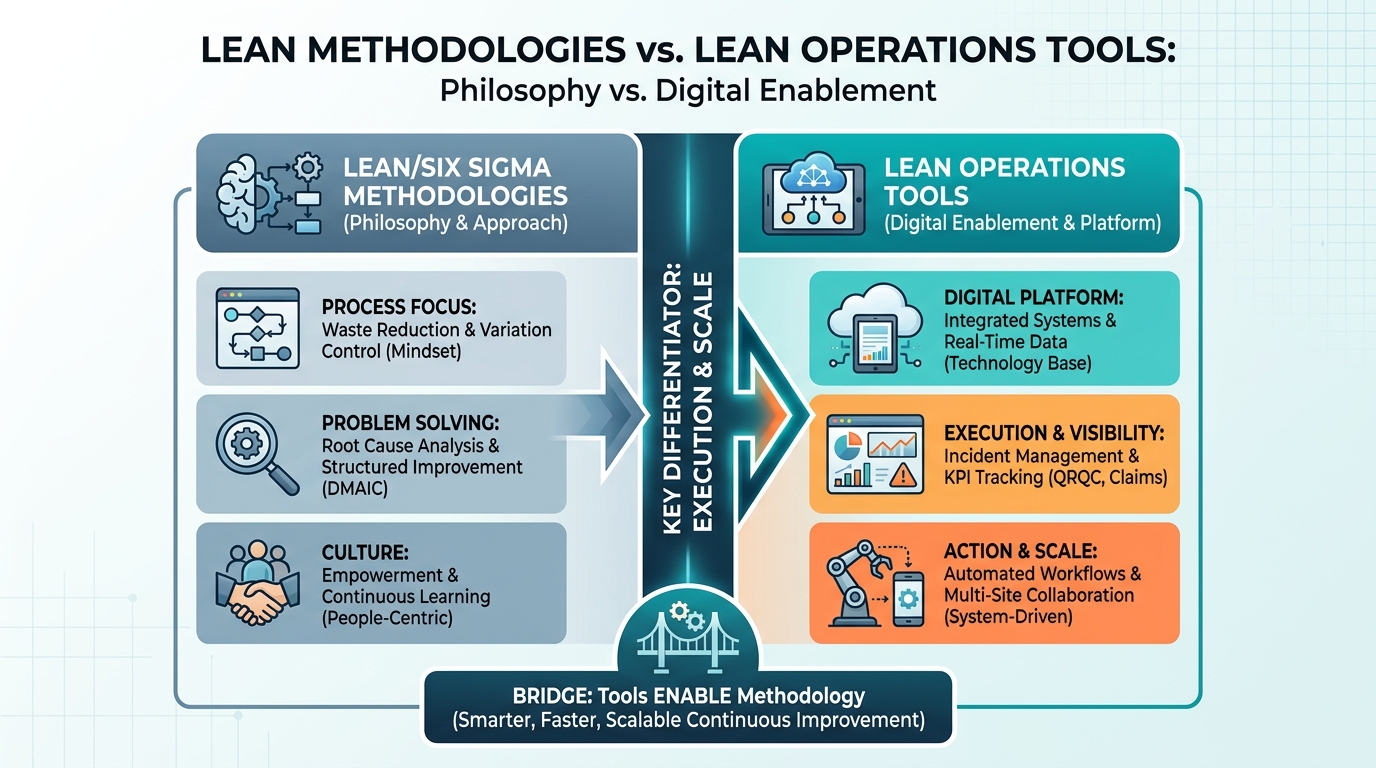
Lean operations tools are digital platforms that enable and accelerate lean and Six Sigma methodologies through technology. While lean and Six Sigma are improvement philosophies focused on waste reduction and process variation control, lean operations tools provide the software infrastructure to implement these methodologies at scale. They automate data collection, facilitate DMAIC projects, track improvement initiatives, and provide real-time analytics that make continuous improvement sustainable across multiple facilities, replacing manual tracking methods.
Can lean operations tools replace spreadsheets and WhatsApp for incident management?
Yes, modern lean operations tools specifically replace spreadsheets and WhatsApp by providing centralized, real-time platforms for incident management. These systems offer structured workflows for reporting incidents, automated notifications, corrective action tracking, root cause analysis documentation, and audit trails that spreadsheets and messaging apps cannot provide. They ensure accountability, prevent information loss, enable cross-plant visibility, and integrate with supplier claims processes, making incident resolution faster and more effective across the entire organization.
What is integrated program management in lean operations tools?
Integrated program management in lean operations tools refers to unified platforms that connect multiple improvement initiatives, projects, and operational processes across an organization. These systems consolidate incident management, supplier claims, corrective actions, quality controls, and KPI tracking into a single ecosystem. This integration eliminates data silos, ensures consistent methodologies across plants, enables resource optimization, and provides leadership with comprehensive visibility into all operational programs, replacing fragmented tools and spreadsheets with cohesive management.
How do lean operations tools support supplier claims and corrective actions?
Lean operations tools streamline supplier claims by providing structured workflows for documenting defects, calculating costs, tracking claim status, and managing supplier responses in real-time. For corrective actions, these platforms facilitate 8D reports, root cause analysis, action item assignment, deadline tracking, and effectiveness verification. The systems replace email chains and spreadsheets with centralized platforms that improve supplier accountability, reduce claim resolution time, and ensure corrective actions are completed and validated across all facilities.
What are the benefits of real-time QRQC platforms in lean operations?
Real-time QRQC (Quick Response Quality Control) platforms enable immediate problem identification, rapid containment, and fast resolution of quality issues across manufacturing facilities. Benefits include reduced response time to defects, improved first-time fix rates, enhanced cross-functional collaboration, standardized problem-solving methodologies, and comprehensive audit trails. These platforms replace delayed spreadsheet reporting with instant notifications and live dashboards, allowing teams to address quality problems before they escalate, minimize scrap costs, and prevent customer complaints through proactive management.
Understanding Lean Operations Tools and Their Impact on Manufacturing Excellence
In today's competitive manufacturing landscape, lean operations tools have become essential for organizations seeking to eliminate waste, improve efficiency, and maintain quality standards across their operations. These methodologies and software solutions enable manufacturing quality managers and operations directors to streamline processes, reduce costs, and respond rapidly to quality incidents.
The integration of digital platforms with traditional lean methodologies represents a significant evolution in how companies manage quality control and operational efficiency. Modern industrial quality control software replaces outdated communication methods like spreadsheets and WhatsApp with real-time incident management, supplier claims tracking, and comprehensive KPI dashboards.
This comprehensive guide explores the essential lean operations tools that manufacturing professionals need to transform their quality management processes and achieve operational excellence across multi-plant operations.
Core Lean Operations Tools for Modern Manufacturing
Quick Response Quality Control (QRQC) Systems
QRQC methodology forms the foundation of effective lean operations in manufacturing environments. This approach emphasizes immediate response to quality issues, root cause analysis, and implementation of corrective actions before problems escalate.
A robust qms quality management system integrated with QRQC principles enables organizations to:
- Detect quality incidents in real-time across multiple facilities
- Mobilize cross-functional teams immediately for problem resolution
- Document corrective actions with visual evidence and accountability
- Track supplier quality issues and manage claims systematically
- Monitor resolution progress through centralized dashboards
Value Stream Mapping Tools
Value stream mapping identifies waste and inefficiencies throughout manufacturing processes. Digital value stream mapping tools allow teams to visualize material and information flow, pinpoint bottlenecks, and design future-state processes that eliminate non-value-adding activities.
These tools integrate seamlessly with integrated program management systems to ensure that improvement initiatives align with strategic objectives and deliver measurable results.
Visual Management Systems
Visual management transforms complex data into actionable insights through dashboards, Andon boards, and performance displays. Manufacturing teams can instantly identify deviations from standard performance and take corrective action.
Understanding what are key performance indicators kpis is crucial for effective visual management. Essential manufacturing KPIs include:
- First Pass Yield (FPY) and defect rates
- Overall Equipment Effectiveness (OEE)
- Cycle time and throughput metrics
- Supplier quality performance scores
- Corrective action closure rates
Integrating Lean and Six Sigma Methodologies
The combination of lean and six sigma creates a powerful framework for operational excellence. While lean focuses on speed and waste elimination, Six Sigma emphasizes variation reduction and defect prevention through statistical analysis.
DMAIC Framework in Digital Tools
Modern lean operations tools incorporate the DMAIC (Define, Measure, Analyze, Improve, Control) methodology into their workflow management. This structured approach ensures that quality improvements are data-driven and sustainable.
| DMAIC Phase | Tool Functionality | Expected Outcome |
|---|---|---|
| Define | Incident logging and problem statement templates | Clear problem definition with scope boundaries |
| Measure | Automated data collection and baseline establishment | Quantified current state performance |
| Analyze | Root cause analysis tools (5 Why, Fishbone) | Identified root causes with supporting evidence |
| Improve | Action plan management and implementation tracking | Implemented solutions with verification |
| Control | KPI monitoring and control plan documentation | Sustained improvements with prevention measures |
Statistical Process Control Integration
Advanced lean operations platforms incorporate statistical process control (SPC) capabilities that monitor process variation in real-time. This proactive approach prevents defects rather than simply detecting them after occurrence.
For supply chain professionals handling supplier quality issues, SPC tools provide objective data for supplier performance evaluation and continuous improvement collaboration.
Essential Templates and Documentation Tools
Standardized templates accelerate problem-solving and ensure consistency across multi-plant operations. Digital platforms provide instant access to proven templates that guide teams through structured improvement processes.
Standardized Work Documentation
Creating and maintaining standardized work instructions is fundamental to lean operations. Modern systems offer customizable templates that include:
- Step-by-step work instructions with visual aids
- Quality checkpoints and inspection criteria
- Safety requirements and PPE specifications
- Cycle time targets and productivity standards
Just as professionals use a cover note template to standardize business communications or a purchase order template in word for procurement processes, manufacturing teams benefit from standardized quality documentation templates.
Problem-Solving and Action Planning Templates
Effective problem-solving requires structured approaches. Digital quality management systems provide built-in templates for:
- 8D (Eight Disciplines) problem-solving reports
- A3 thinking and problem-solving worksheets
- Corrective and preventive action (CAPA) plans
- Failure Mode and Effects Analysis (FMEA) documentation
These templates function similarly to productivity tools like a to do list template or canva invoice template, providing structure while allowing customization for specific situations.
Visual Communication Tools
Clear visual communication accelerates understanding and response times. While consumer tools like bubble letter template printable or pumpkin carving templates print serve creative purposes, manufacturing visual tools serve critical operational functions.
Professional visual management includes color-coded status indicators, process flow diagrams, and performance trend charts that enable at-a-glance understanding of operational status.
Implementing Real-Time Incident Management
Moving Beyond Spreadsheets and Messaging Apps
Many manufacturing organizations still rely on spreadsheets and WhatsApp for quality incident management. This fragmented approach creates significant challenges:
- Information scattered across multiple platforms and devices
- No centralized visibility for operations directors
- Delayed response times due to communication gaps
- Difficulty tracking corrective action completion
- Limited analytical capabilities for trend identification
Transitioning to a dedicated QRQC platform eliminates these inefficiencies by providing a single source of truth for all quality-related activities across every plant.
Real-Time Collaboration Features
Modern lean operations tools enable seamless collaboration across geographically dispersed teams. Key features include:
| Feature | Benefit | Impact on Operations |
|---|---|---|
| Instant notifications | Immediate incident awareness | Reduced response time by 60-80% |
| Photo/video documentation | Visual evidence capture | Faster root cause identification |
| Cross-functional task assignment | Clear accountability | Improved action completion rates |
| Mobile accessibility | Shop floor engagement | Real-time data from production areas |
| Automated escalation | Prevents issue neglect | Ensures leadership visibility |
Supplier Quality Management and Claims Processing
Systematic Supplier Performance Tracking
Supply chain professionals handling supplier quality issues need robust tools for managing incoming material defects, processing claims, and driving supplier improvement initiatives.
Comprehensive supplier quality management within lean operations tools includes:
- Incoming inspection result tracking and trend analysis
- Supplier defect database with root cause documentation
- Automated claim generation with supporting evidence
- Supplier corrective action request (SCAR) management
- Supplier scorecard generation based on multiple KPIs
Collaborative Supplier Development
Rather than simply penalizing suppliers for defects, leading organizations use lean operations tools to facilitate collaborative improvement. Shared access to quality data enables suppliers to understand issues quickly and implement effective corrective actions.
This approach transforms supplier relationships from adversarial to partnership-based, resulting in improved quality, reduced costs, and enhanced supply chain resilience.
KPI Dashboards and Performance Analytics
Multi-Plant Performance Visibility
For manufacturing quality managers overseeing multi-plant operations, consolidated KPI dashboards provide essential visibility into performance across all facilities. These dashboards answer critical questions about comparative performance, best practice identification, and resource allocation priorities.
Effective dashboards display metrics in context, showing not just current values but also trends, targets, and benchmarks that enable informed decision-making.
Predictive Analytics and Trend Identification
Advanced lean operations platforms leverage historical data to identify emerging trends before they become major problems. Predictive analytics capabilities alert operations directors to potential issues based on pattern recognition and statistical modeling.
This proactive approach represents a significant evolution from reactive problem-solving, enabling prevention rather than correction.
Custom Reporting for Stakeholder Communication
Different stakeholders require different information formats. Lean operations tools provide flexible reporting capabilities that generate executive summaries for leadership, detailed technical reports for engineering teams, and performance scorecards for plant managers.
Automated report generation saves countless hours previously spent compiling data from multiple sources and creating presentation materials.
Best Practices for Lean Operations Tool Implementation
Change Management Considerations
Successful implementation of lean operations tools requires careful attention to change management. Plant managers must address resistance to new systems through:
- Clear communication of benefits and expected outcomes
- Involvement of frontline employees in system configuration
- Comprehensive training programs tailored to different roles
- Phased rollout that demonstrates quick wins
- Ongoing support and continuous improvement of the system itself
Integration with Existing Systems
Lean operations tools should complement rather than complicate existing technology infrastructure. Key integration considerations include:
- Connectivity with ERP systems for material and production data
- Integration with manufacturing execution systems (MES)
- Data exchange with supplier portals and customer systems
- Compatibility with quality laboratory information systems
Seamless integration ensures data flows automatically between systems, eliminating manual data entry and reducing errors.
Continuous Improvement of the Tools Themselves
The most effective organizations treat their lean operations tools as living systems that evolve based on user feedback and changing business needs. Regular review sessions with cross-functional teams identify enhancement opportunities and ensure the tools continue delivering value.
For organizations exploring digital marketing and operational efficiency in other areas, insights from online marketing tools demonstrate how technology platforms across industries continue evolving to meet user needs.
Measuring ROI from Lean Operations Tools
Quantifiable Benefits
Investment in lean operations tools delivers measurable returns across multiple dimensions:
| Metric Category | Typical Improvement | Financial Impact |
|---|---|---|
| Incident response time | 50-70% reduction | Reduced scrap and rework costs |
| Corrective action closure rate | 30-50% improvement | Prevention of recurring defects |
| Quality data collection time | 60-80% reduction | Labor cost savings |
| Supplier defect rates | 20-40% reduction | Lower incoming inspection costs |
| Customer complaint response | 40-60% faster | Improved customer retention |
Intangible Benefits
Beyond quantifiable metrics, lean operations tools deliver significant intangible benefits including improved employee engagement, enhanced organizational learning, stronger supplier relationships, and increased customer confidence in quality systems.
These cultural improvements often prove even more valuable than direct cost savings, creating sustainable competitive advantages that competitors cannot easily replicate.
Future Trends in Lean Operations Technology
Artificial Intelligence and Machine Learning
Emerging AI capabilities will transform lean operations tools by automatically identifying patterns in quality data, recommending corrective actions based on historical success rates, and predicting potential failures before they occur.
Machine learning algorithms will continuously improve their accuracy as they process more data, becoming increasingly valuable over time.
Internet of Things (IoT) Integration
Connected sensors and smart equipment will automatically feed data into lean operations platforms, eliminating manual data collection and enabling real-time process monitoring at unprecedented granularity.
This IoT integration will enable truly predictive quality management, where systems automatically adjust parameters to prevent defects rather than simply detecting them.
Augmented Reality for Problem-Solving
Augmented reality (AR) tools will overlay digital information onto physical equipment, guiding technicians through troubleshooting procedures, displaying real-time sensor data, and enabling remote expert assistance for complex quality issues.
These capabilities will be particularly valuable for multi-plant operations where expertise may be concentrated at specific facilities but needed across the entire network.
Transform Your Quality Management with Modern Lean Operations Tools
The evolution from spreadsheets and messaging apps to comprehensive lean operations platforms represents a fundamental shift in how manufacturing organizations manage quality, respond to incidents, and drive continuous improvement.
For manufacturing quality managers, supply chain professionals, operations directors, and plant managers, the question is no longer whether to adopt these tools but how quickly they can be implemented to capture competitive advantages.
The integration of QRQC methodologies with real-time digital platforms creates unprecedented visibility, accelerates problem resolution, and enables data-driven decision-making across every plant and supplier in your network.
Ready to replace fragmented spreadsheets and WhatsApp communications with a unified platform for incident management, supplier claims, corrective actions, and KPI dashboards? Discover how QRQC's industrial quality control software can transform your multi-plant operations with real-time collaboration, comprehensive analytics, and proven lean methodologies built into every feature.
Visit our about page to learn more about our approach to quality management, or explore the QRQC blog for additional insights on implementing lean operations tools across your organization.
Article created using IntentRank